
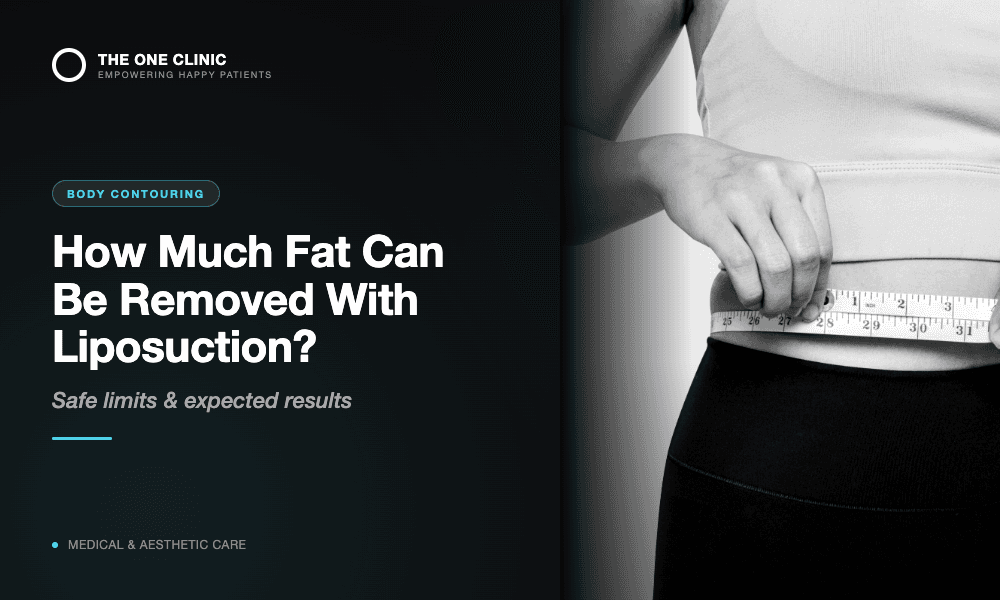
If you wonder how much fat can be removed with liposuction, the direct medical answer is three to five litres. This volume is about 6–8 pounds of fat. However, for safe body contouring, expert doctors focus on localised liposuction and remove up to 1 litre. This precise method safely targets stubborn pockets of fat. It does not cure severe obesity. Instead, it serves as a highly accurate body sculpting tool.
This guide explains the strict clinical limits. You will learn the exact volumes, the safety rules, and what to expect from the final shape.
The Exact Volume You Can Remove Safely
Many patients want to know exactly how much fat can liposuction safely remove in a single session. Medical boards set very strict rules for patient safety. A surgeon can extract up to 5 litres of fat and fluid combined. If a surgeon takes more than five litres, the human body suffers a massive shock. Blood pressure drops fast. Severe dehydration occurs. That is why expert doctors strictly adhere to the safe fat-removal limits liposuction rules. They prioritise your internal health over a dramatic visual change. Five litres provides a massive visual shift without danger.Clarify Scale Weight Versus Visual Shape
Patients often ask: 'How much weight can you lose with liposuction?' The answer surprises many people. You will only drop a few pounds on the physical scale. Fat has a high volume but a very low density. It takes up a massive amount of space but weighs very little. Therefore, you must not use this procedure to drop massive numbers on the scale. Instead, you use it to drop dress sizes. You will notice a flatter stomach or slimmer thighs. The visual change looks huge, even if the scale stays the same. For a deeper look at what the procedure actually achieves, see our guide on does liposuction work.Need A Simple Plan For Stubborn Fat?
- A slim shape does not have to be hard to achieve
- Expert practitioners make it easy to contour your body safely
- Accurate advice and precise treatment plans
Understand the Fat Removal Percentage
You cannot extract all the fat from one specific area. Doctors calculate a precise liposuction fat removal percentage for each patient. Usually, a surgeon extracts about seventy to eighty per cent of the fat cells in the targeted zone. You must leave a thin layer of fat behind. This layer sits directly under the skin. It provides a soft, natural, and smooth texture. If a doctor removes 100% of the fat, the skin will stick directly to the muscle. This creates a harsh, uneven, and unnatural appearance.What Determines the Volume Reduction?
Every human body is unique. So, the exact liposuction fat reduction amount varies from person to person. A specialist doctor considers several physical factors before deciding on the final volume.- Your Current Size: You must sit close to your ideal weight.
- Your Overall Health: A strong heart and healthy lungs allow for a longer, safer session.
- The Target Area: The stomach holds more fat than the chin or the upper arms.
- Tissue Elasticity: Your skin must snap back tightly after the fat leaves. Loose skin requires a different surgical approach.
Why Doctors Focus on Small Pockets of Fat
Some clinics promise massive volume extraction. However, you must respect the maximum fat removal with liposuction. When doctors exceed 5 litres, they call it a large-volume extraction. This requires a hospital stay and intense overnight care. Large volume extraction causes severe trauma to the tissue. Localised liposuction targets specific pockets of fat safely. Safe clinics refuse to put your life in danger. They stay at the one-litre maximum limit to guarantee a smooth, safe recovery. To understand the full safety profile, read our guide on whether liposuction is safe.Specific Body Areas and Their Limits
Different body regions store different types of fat. The surgeon adjusts the extraction volume for each specific zone.- The Stomach: This area holds thick, deep fat. The surgeon can safely remove a large volume here.
- The Thighs: The legs require precise work to ensure both sides look perfectly even.
- The Arms: The upper arms contain very little fat. The surgeon extracts tiny amounts to prevent loose, crepey skin.
- The Chin: The neck and chin require microscopic tools. The doctor removes only a few millilitres to sharpen the jawline.
Tired of Fat That Refuses to Move?
- Safely discover the freedom of a sculpted figure
- Medical specialists assess your body
- Secure contour programme designed just for you
What You Will See From the Final Results
You will not see your final shape immediately. In fact, you will look swollen and puffy for several weeks. You must be patient to see the true liposuction fat-removal results. The human body responds to the surgical trauma straightaway with heavy inflammation. Water rushes to the area to heal the internal tissue. As the weeks pass, this water drains away naturally. The skin contracts and settles over your new slim contour. You will see the final, smooth shape about three to six months after your clinic visit. For a full week-by-week breakdown, see our guide on liposuction recovery time.Who Qualifies for This Clinical Procedure?
This tool does not suit everyone. You must meet specific clinical criteria to ensure absolute safety.- You must possess firm, elastic skin. If your skin already sags, the fat removal will make it look worse.
- You must have maintained a stable weight for at least 6 months prior.
- People with severe heart conditions or blood disorders cannot receive this treatment safely.
The Importance of Skin Elasticity
Many patients focus purely on the fat volume. However, the quality of your skin remains equally important. When the doctor removes the fat, a space remains under the skin. Your skin must shrink and snap back to close this space. If you possess young, elastic skin, it will shrink perfectly. If you have loose, older skin, it might sag after the procedure. If your skin lacks elasticity, the doctor might suggest a surgical skin lift to pair with the fat extraction.Different Clinical Methods to Remove Fat
Modern medicine provides several distinct methods for safely extracting fat.- Traditional (Tumescent): Uses a hollow tube to manually break up and suction fat cells.
- Ultrasound-Assisted: Sound waves melt the fat first, making extraction much smoother.
- Laser-Assisted: Light energy melts fat and tightens the skin simultaneously.
The Truth About Non-Surgical Fat Reduction
Many patients compare this surgical option to non-surgical machines. Devices that freeze or heat the fat provide a gentle alternative. However, non-surgical tools provide very mild changes. They only remove tiny pockets of fat. If you want a dramatic, precise body contour, a surgical approach provides the absolute best result. Surgery allows the doctor to sculpt the tissue manually. Non-surgical machines cannot match this level of precise control.How Age Affects Your Final Contour
Age plays a massive role in your cosmetic journey. Young patients possess very tight, elastic skin. Their bodies bounce back from surgical trauma very fast. Older patients often possess delicate, thin skin. The doctor must extract the fat very carefully to prevent a dimpled texture. If you have mature skin, the surgeon will remove a slightly smaller volume of tissue. This cautious approach ensures the surface layer remains smooth and flat.How to Prepare Your Body Safely
A successful outcome relies heavily on proper preparation. Once your clinic visit is scheduled, you must prepare your body before you arrive.- Stop Harsh Toxins: Avoid all alcohol and cigarette smoke for four weeks. Smoke destroys oxygen flow and delays tissue repair.
- Pause Blood Thinners: Stop pills like aspirin or ibuprofen. They increase the risk of severe bruising and internal blood loss.
- Hydrate Well: Drink plenty of pure water to keep your cells plump and healthy.
- Eat Lean Protein: Protein provides the exact building blocks your body uses to repair the surgical cuts.
What to Wear to the Clinic
On the day of your clinic visit, wear very loose, soft clothes. Do not wear tight jeans or restrictive tops. When you leave the clinic, your body will feel very sore and puffy. Loose clothes prevent painful friction against your fresh wounds. Choose garments with buttons or zippers on the front to avoid a painful stretch over your head.How to Shower After the Procedure
You must keep your incisions completely dry for the first two days. After forty-eight hours, you can take a fast, lukewarm shower. Do not use very hot water, as it can cause sudden dizziness and dilate your blood vessels. Pat your body dry with a clean towel. Do not rub the skin hard.The Impact of Nutrition on Your Recovery
Your daily diet acts as the ultimate natural medicine. After surgery, your body needs the right fuel to rebuild the tissue.- Eat meals rich in iron to restore red blood cells after minor blood loss.
- Eat meals rich in vitamin C to help your skin produce fresh, strong collagen.
- Cut your salt intake completely — high salt levels force tissues to hold excess water and worsen swelling.
The Vital Recovery Phase
The way you treat your body at home dictates your final result.- Wear a tight compression garment for several weeks to stop fluid buildup and reduce swelling.
- Rest completely for the first few days.
- Avoid intense physical exercise for at least four weeks.
- Gentle walks remain perfectly safe and prevent dangerous blood clots.
The Mental Side of Body Transformation
Physical changes happen fast, but mental changes take time. You might feel quite emotional for the first few days as the anaesthetic leaves your system slowly. You will look in the mirror and see dark marks and puffy tissue. You must remember that the final result requires massive patience. Do not judge your new shape until three full months pass. Your mind will adapt to your new, slim contour once the tissue has completely settled.
Look and Feel Your Best Every Day!
- •Advanced facial, body, and hair treatments.
- •Tailored solutions for lasting confidence.
- •Caring support at every step.
How to Maintain Your New Shape
The procedure permanently removes specific fat cells. Those exact cells will never return to your body. However, if you consume poor-quality fuel, the remaining fat cells will expand.- Eat a balanced diet full of fresh vegetables and lean meats.
- Avoid refined sugar and processed snacks.
- Maintain a consistent exercise routine.
Conclusion
When you ask how much fat can be removed with liposuction, the general medical limit allows between two and five litres. However, for maximum safety, expert clinics perform localised liposuction to remove up to one litre. This targets stubborn pockets of fat perfectly. This procedure is not a weight-loss tool. Instead, it provides precise body contour shapes. If you respect the clinical limits and follow the strict aftercare rules, you will safely enjoy a permanent, beautiful result. If you want a full body assessment or have an inquiry about Liposuction in Leicester, consult the expert specialists at The One Clinic.Take the Next Step in Your Aesthetic or Health Journey!
- •Personalised treatments for your unique needs.
- •Safe, effective, and natural-looking results.
- •Expert guidance from our professionals.
.png&w=3840&q=75)