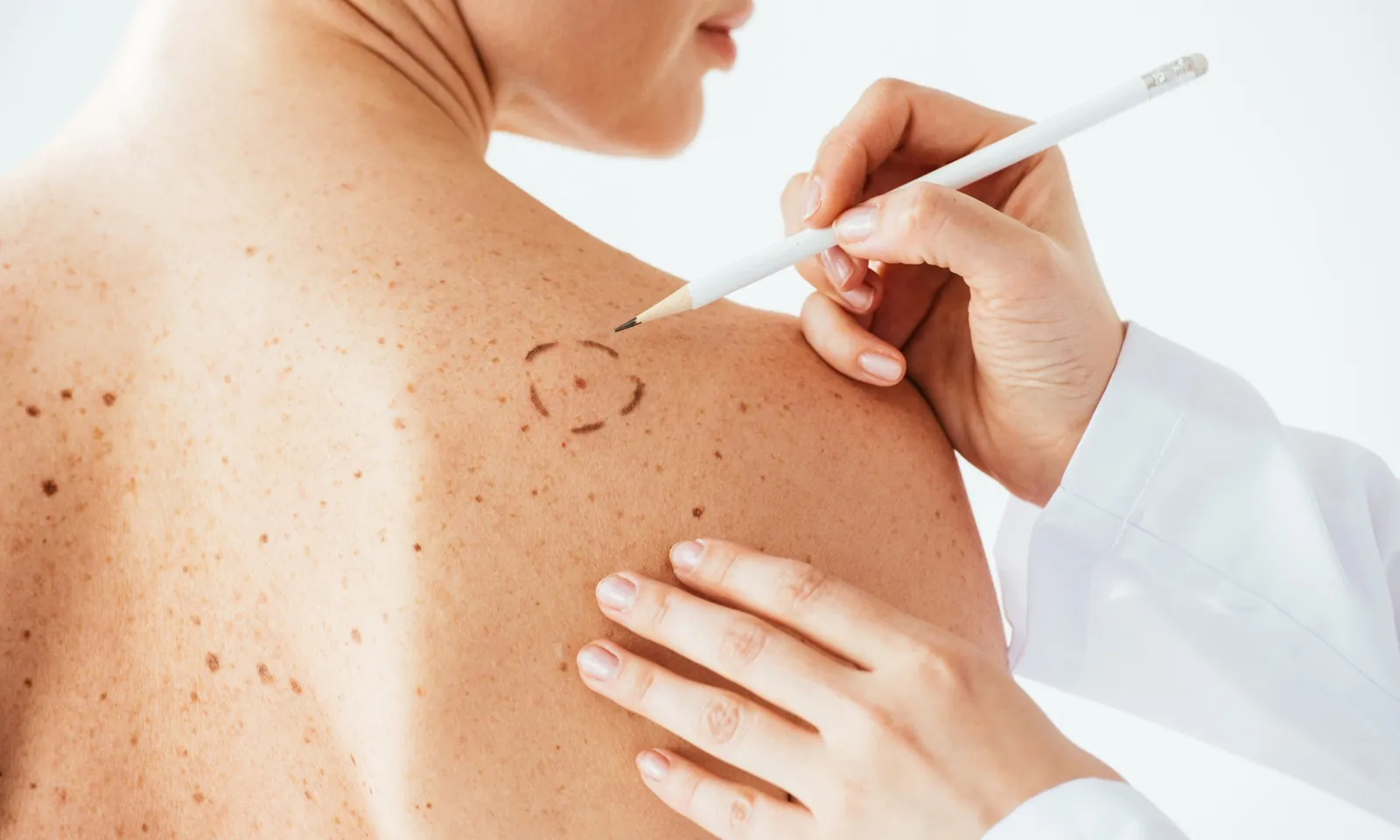
If you're thinking about having a mole removed (or indeed you've just had one removed), the scar is probably going to be on your mind. That's a perfectly valid concern. You're removing a mole and replacing it with a scar, and you want to know what that scar is going to look like.
It's actually far less of a problem than you'd think. Scarring from mole removal is quite normal, is typically very minimal and changes dramatically in the first year. It's at its most apparent between 4 and 12 weeks, and then it gradually softens, flattens and fades. By 12 to 18 months, most will have settled down to a very pale mark which is far less noticeable than the mole itself was.
In this guide, our GPs explain what your scar should look like week by week, what's normal and what's not, and the simple things you can do to help it heal properly.
Does Removing a Mole Leave a Scar?
Yes, any time the skin is cut or treated, it will scar. A good clinician can't prevent scarring, but they can absolutely get the scar as small and neat as possible. In the vast majority of cases, a mole removal scar will be a very fine pale line or a small flat circle.
How your scar looks depends on a few things:
- How was the mole removed? Laser and shave removal will generally leave a small round mark. Surgical excision will leave a thin line (often a bit longer than the mole) so that the edges can close up.
- The face tends to heal very well as it has a good blood supply. The back, chest and shoulders are under more tension so the scars in those areas are more likely to spread or thicken.
- The size and depth of the mole (larger or deeper moles need a bigger wound).
- Your skin. Age, skin tone and your own individual propensity to scar all play a part.
- Aftercare (picking at the scabs, stretching the area, sun exposure, etc.) can all make a scar more noticeable.
How We Remove Moles at The One Clinic
The method of removal has a massive effect on the eventual appearance of the scar. Prior to choosing a method of removal, our doctors will examine the mole, looking at its size, shape, colour and depth and will also ask you about any changes you've noticed. If the mole has any concerning features, it will be removed surgically so that the entire lesion can be sent to the lab for full investigation.
Surgical mole removal (excision or shave)
- Surgical mole removal is carried out under local anaesthetic. There's a brief sting from the injection, and then you're completely numb for the duration of the procedure.
- With excision, the mole and a small margin of skin around it are removed, and the wound closed with stitches. With shave removal, the mole is shaved off level with the skin and then covered with a dressing.
- Our doctors use sterile technique and very fine surgical instruments to keep the scar as small as possible.
- The removal itself typically takes less than 20 minutes.
- Stitches on the face generally come out at 5 to 7 days and on the body at 10 to 14 days.
- The wound will generally heal completely in 4-6 weeks, and the scar is usually a very fine, flat line which will fade considerably over the ensuing months.
- The mole can be sent off for histology (i.e. lab testing) if required at an extra cost. Results generally come back in 2-3 weeks.
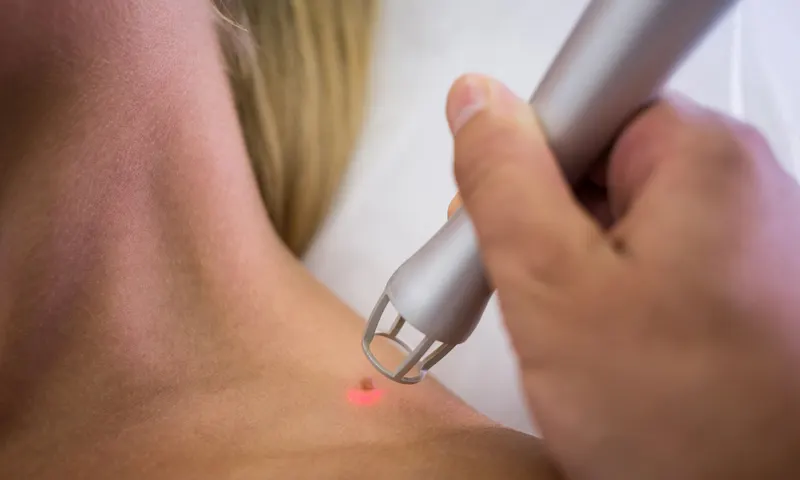
Laser mole removal (Erbium YAG)
- Laser mole removal is only ever used on moles which our doctor has assessed as benign.
- A numbing cream is used first (and local anaesthetic if required). The laser itself takes just a few minutes per mole.
- There's no cutting and no stitches. A small scab forms and the area then fades over 4 to 8 weeks.
- It tends to leave less scarring than surgery (typically just a very small flat mark). Some quite deep moles are actually better candidates for surgical removal.
Before any surgery is performed, we'll go through with you which option is right for you and what kind of scar you can expect. You'll leave with clear aftercare and scar care instructions. Following surgical removal, we'll see you for a follow-up to check the healing, remove your stitches and go through your histology results.
Mole Removal Scar Healing: Week by Week
Every wound heals in stages. The times given below are just typical ones; everyone heals in their own way, so use them as a guide rather than a timetable.
| When |
What you'll likely see |
What to do |
| Days 1 to 2 |
Mild redness, slight swelling, a little tenderness |
Keep the area dry for 48 hours. Applying a cold compress for 15 minutes can help reduce swelling. Keep it out of direct sun. |
| Days 3 to 7 |
A scab forms (laser or shave), or a neat stitched line (excision). Facial stitches may come out now. |
Clean gently, pat dry, don't pick. Use only the products we recommend. |
| Week 2 |
Scab starts to lift. Body stitches usually come out between days 10 and 14. |
Avoid heavy exercise that stretches the area. No waxing, peels or lasers near it. |
| Weeks 3 to 4 |
New pink skin underneath. Histology results (if sent) are usually back. |
Once the skin has fully closed, start daily SPF and ask us about silicone gel. |
| Weeks 4 to 12 |
The scar may look pinker, firmer, or slightly raised. This is normal. |
Keep up SPF and silicone. Gentle massage can help. |
| Months 3 to 6 |
Redness fading, scar softening and flattening |
Carry on with sun protection. |
| Months 6 to 18 |
Scar becomes paler and flatter. It's now close to its final look. |
Judge the final result from here, not earlier. |
Days 1 to 7: the wound closes
In the first week, your body will be sending blood and healing cells to that area, so it'll be red and a bit tender. A small scab will form after laser or shave removal (that's just your body's natural plaster), and you absolutely must leave it alone. If you've had stitches, you'll see a very thin line holding it together.
Weeks 2 to 4: the scab lifts and new skin appears
Stitches (if you've got any) are generally removed at 5 to 7 days on the face and 10 to 14 days on the body. Any scab will come off in that time. The new skin underneath is going to be pink, shiny and very fragile, so be very gentle with it. If the mole is sent off for histology (the tissue lab work), then the results will normally be back in 2 to 3 weeks.
Weeks 4 to 12: the "why does it look worse?" stage
This is the stage people are most concerned about. What's actually happening underneath is that your body is depositing new collagen to reinforce the skin. It does this very rapidly and quite randomly, so the scar can appear pinker, firmer, itchy and/or slightly more raised than it did a few weeks previously. This is completely normal, and it's not your final result. Most mole removal scars are at their most obvious at this stage.
Months 3 to 18: the scar matures
The body slowly reorganises that collagen over the ensuing months. The scar softens, flattens and loses its colour. There's a big difference noticeable between 3 and 6 months and then smaller improvements right up to 12-18 months.
Do you worry that removing a mole might leave a scar?
- The doctors at The One Clinic first check every mole and choose the gentlest, most suitable method to keep the finish neat.
- Many mole removals need no stitches at all.
Book a Consultation
Face Scars After Mole Removal
Facial moles are the ones people are most concerned about, and that's entirely reasonable. The good news is the face is often one of the best areas to heal. It has such a good blood supply that wounds close very quickly and facial stitches usually come out after 5 to 7 days.
Can You Remove Facial Moles Without Scarring?
There's no such thing as a completely scar-free method, so be very wary of anyone who claims that. What a careful doctor can achieve is to plan the removal so that the scar is as small and as inconspicuous as possible, and in the great majority of cases there will be minimal scarring.
- Choosing laser or shave removal for a raised, harmless-looking mole, which often leaves a small, flat mark
- Lining up the surgical cut with your natural skin creases so that the scar ends up in a line you already have
- Using fine stitches and removing them at the right time
If it's a mole that's of any concern at all, it does need to be removed surgically so the whole thing can be looked at. In that situation, a clear answer is more important than the size of the scar, and we'll be absolutely up front with you.
Following
mole removal treatment, the importance of sun protection is even greater. Your face is going to be getting a hell of a lot more sun than the rest of you, and the UV will absolutely darken a healing scar.
Why Is My Mole Removal Scar Red or Raised?
A red scar is typically a healing scar. New skin will grow its own little blood vessels to feed it, and that's what gives it the pink/red appearance. As the scar matures, the blood vessels will shrink, and the scar will lighten in colour. This can take many months, so don't judge it too soon.
Redness that spreads, is hot to the touch or comes with pus in the first week or two is different and could be a sign of infection (see When to get your scar checked below).
A slightly raised, firm scar in the first few months is also very common (again, that collagen build-up) and it'll generally sort itself out.
There are two types of scar that don't settle as easily:
- Hypertrophic scars are thick and raised but remain within the lines of the original wound. They tend to improve gradually over a period of a year or so.
- Keloids grow beyond the original wound, can continue to grow and may be itchy or tender. They're most commonly seen on the chest, shoulders, upper back and earlobes and are more prevalent in people of darker skin or in those with a family history of keloids.
If you've got a keloid previously, then let us know at your consultation. That may influence the treatment we go for, or indeed whether we think removal is appropriate in the first place.
How to Help Your Mole Removal Scar Fade?
You can't control every aspect of how you scar, but
good mole removal aftercare makes a real difference. These are the steps our doctors recommend.
In the first two weeks
- Keep it dry for 48 hours (24 hours after laser removal), then just gently clean it and pat it dry (no rubbing).
- Leave the scab alone. If you pick it off too soon, it can leave a darker, more permanent mark.
- Use only the products we recommend. Perfumed creams and all sorts of home remedies can irritate a fresh wound.
- Try not to stretch the area at all. For several days after surgical removal and for 1-2 weeks after laser removal (particularly if the mole was on your back, chest or shoulders) avoid any heavy exercise. After laser removal, you should also avoid swimming for 1-2 weeks.
- No waxing, peels or laser treatments in the area for at least two weeks.
- If you've had stitches, then you need to come back in for stitch removal at the appropriate time.
Once the skin has fully closed
- Wear SPF 30 or higher every day (even on a cloudy Leicester winter day), as the sun is one of the main causes of scars darkening and remaining visible. Do it for at least a year.
- Try silicone gel or silicone sheets. These are among the best-supported methods for getting a scar to flatten and fade. They should only be used once the wound has completely closed (no scab, no weeping). We can advise you as to which of the two would be best.
- Massage the scar gently from around 3 to 4 weeks (assuming it's fully healed). Use clean fingertips and make small circles for a couple of minutes once or twice a day.
- Support it if it's under tension. Scar tape on the back or shoulders can help prevent a healing scar from stretching.
What About Older Scars?
If your scar is still bothering you after a year, then treatments such as laser scar resurfacing may be of some help. A doctor can have a look at it and go through with you what is realistic.
Mole Removal Scars on Brown and Black Skin
If you've got medium to dark skin, your scar may heal a little differently (rather than going from pink to pale, it may actually go darker than the surrounding skin for a period of time). This is known as post-inflammatory hyperpigmentation. It's very common, it isn't harmful, and it will generally fade over months, though it can sometimes take longer.
Darker skin is also more prone to developing keloid scars (particularly on the chest, shoulders, upper back, jawline and earlobes).
A few things help:
- Be extra strict with daily SPF, as UV deepens dark marks
- Avoid harsh scrubs or lightening products on a healing scar unless a doctor suggests them
- Mention any past keloids or dark marks at your consultation so that we can plan the removal around your skin
Our doctors see patients with every skin tone, so we'll take yours into account when we're recommending a method. For example, laser treatment carries a higher risk of pigment changes on darker skin, so it isn't always the best option.
When to Get Your Scar Checked?
Most scars heal without any trouble. Contact the clinic that removed your mole if you notice:
- Redness, warmth or swelling that's spreading or getting worse after the first few days
- Pus, a bad smell, or increasing pain
- Bleeding that doesn't stop after 10 minutes of firm pressure
- A high temperature or feeling unwell
- The wound opening up
- A scar that keeps growing beyond the original wound
- A dark spot or patch of brown pigment coming back where the mole was
A little bit of pigment returning after laser or shave removal doesn't in itself indicate a problem, but it should always be looked at by a doctor rather than just being left to settle.
Important note: If you need urgent medical advice and can't reach the clinic, call NHS 111. In an emergency, call 999.
Mole Removal Before and After
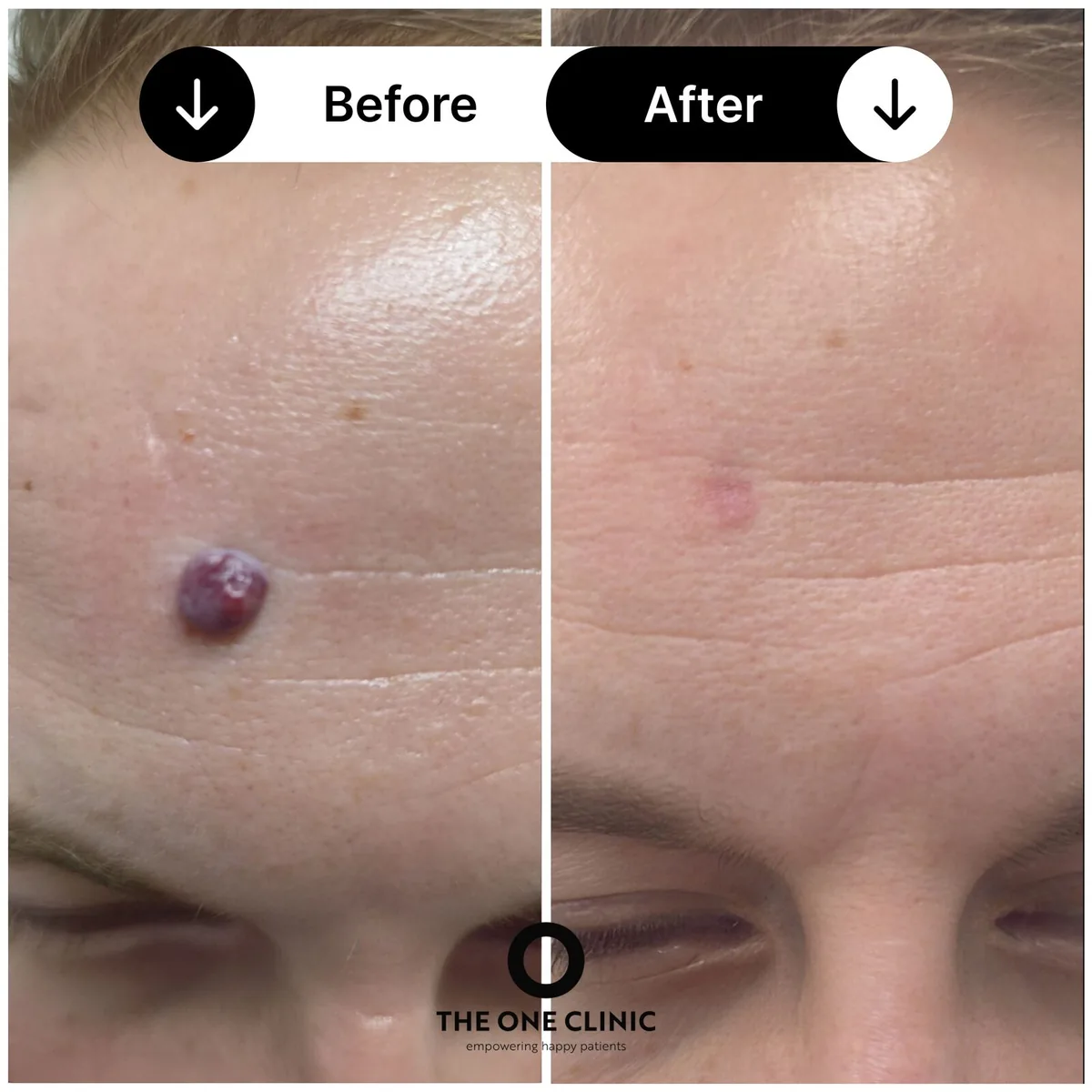 Results vary from person to person.
Mole Removal Scar FAQs
1. Does mole removal leave a scar?
Yes, every method leaves some mark. In most cases, it's a very fine, flat line or a small circle which will fade considerably over the 12 to 18 month period.
2. How long does a mole removal scar take to heal?
After surgical removal, the wound will normally heal in 7 to 14 days and will be completely settled in 4 to 6 weeks. After laser removal, any scab will normally settle in 1 to 2 weeks, and the area will fade over 4 to 8 weeks. The scar will continue to improve for up to 18 months.
3. Why does my scar look worse a month after removal?
Between 4 and 12 weeks, your body will be actively producing new collagen, and you should see the scar become pinker, firmer and possibly slightly raised. This is completely normal and will generally settle.
4. Does laser mole removal leave a scar?
Laser removal will typically leave you with a small, flat, round mark rather than a line, and usually less scarring than surgery. The area may look slightly darker at first, then fade. Most moles can be treated with laser, but very deep moles may be better removed surgically. A doctor examines every mole first, and any with worrying features won't be lasered.
5. Can I prevent scarring after mole removal?
You can't stop a scar forming, but you can certainly help it to heal properly. Don't disturb the scab, don't stretch the area, wear SPF every day and use silicone gel or sheets once the skin has closed.
6. Will the mole grow back in the scar?
It's rare but can happen, particularly after a shave or a laser treatment. If you do see colour coming back, then get it checked by a doctor.
7. When can I wear make-up over a facial scar?
Wait until the wound has completely closed and the scab has gone (usually after 2 weeks). If you're unsure, just ask us.