
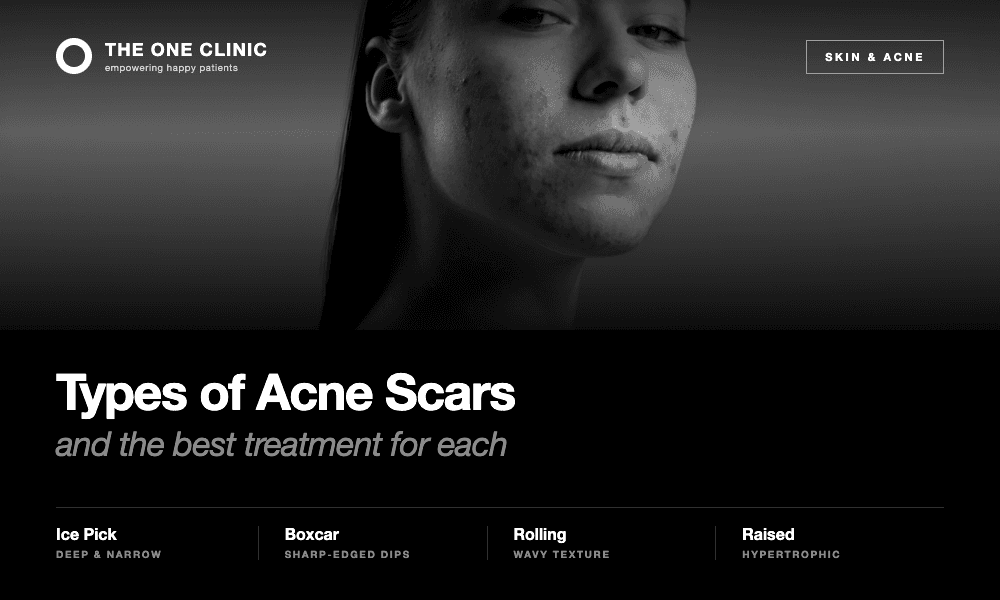
Two common forms of acne scars are atrophic and hypertrophic. An atrophic scar is a small depression within the skin, while a hypertrophic one appears as a raised mark. The type of scar, its depth, and your skin colour determine the best treatment. In some cases, treatments that increase collagen production can improve atrophic scars.
Acne scars form when a breakout destroys tissue during healing. While some marks may heal without complications, scars usually do not fade unless treated. This guide breaks down each scar type and its most effective treatment, so you know exactly what to expect before you book a consultation.
Key Takeaways
- Acne scars fall into two groups: atrophic (depressed) and hypertrophic or keloid (raised).
- Atrophic acne scars include ice pick, boxcar, and rolling scars, each with a different shape and depth.
- Laser resurfacing, Morpheus8 (radiofrequency microneedling), and chemical peels rank among the most effective options.
- Most people need a course of three to six sessions, with results building over several months.
- Dark or red acne marks are not true scars and often fade with time or gentler treatments.
Types of Acne Scars
Acne scars fall into groups based on whether they sit below or above the skin. Getting this classification right is the first step in choosing the right treatment.1. Atrophic Scars (Depressed)
These are the most common type and form when the skin loses tissue during healing. There are three kinds:- Ice pick scars: Deep, narrow pits that look like small holes in the skin. They are the hardest type to treat because they reach so far down.
- Boxcar scars: Round or oval dips with clear, sharp edges and a wider, flat base. They often appear on the cheeks and temples.
- Rolling scars: Broad, shallow depressions with sloping edges that give the skin a wavy, uneven look. Fibrous bands that tether the skin from below create them.
2. Hypertrophic and Keloid Scars (Raised)
These form when the skin makes too much collagen during healing.- Hypertrophic scars are raised, firm, and stay within the border of the original spot. They appear most often on the chest, back, and jaw.
- Keloid scars grow beyond the original site and can continue to enlarge over time. People with darker skin tones are more prone to them.
Not Sure Which Type of Acne Scar You Have?
- A proper diagnosis is the difference between a treatment that works and one that wastes your time and money
- Expert clinicians examine and classify your scars before recommending anything
- The right treatment matched to your skin type and scar depth
Why Do Scars Form?
Acne scarring occurs as a result of changes that happen when acne spots heal. Inflammatory reactions caused by acne, particularly cysts and nodules, damage the surrounding tissue. The skin's healing process then produces either excess or insufficient collagen, causing the scar. Where collagen production is insufficient, a depression forms in the skin. Where it is excessive, the skin appears elevated. Picking and squeezing spots increases the likelihood of scarring. Not everyone who has acne ends up with scars. Your risk is higher if you had severe or cystic acne, left it untreated for a long time, or have a family history of scarring.Acne Scars vs Acne Marks: Know the Difference
People often confuse scars with marks, but the two are not the same.- Acne scars are textural changes: the skin surface is dented or raised. These stay permanent without treatment.
- Acne marks are flat patches of colour. Brown marks (post-inflammatory hyperpigmentation) and red or pink marks (post-inflammatory erythema) sit at skin level and usually fade over weeks or months.
How Does Acne Scar Treatment Work?
Most professional treatments work by prompting the skin to rebuild itself. They create tiny, controlled areas of injury deep in the skin, which kick-starts a natural healing response. The skin then produces fresh collagen and elastin that fill and smooth depressed scars from beneath the surface. Results take time to develop rather than occurring immediately. Since collagen takes weeks or months to develop properly, improvements will continue even after the procedure is complete. For raised scars, the approach is different. Rather than adding tissue, procedures aim to minimise and reduce collagen levels. If you have been searching for how to get rid of acne scars, the honest answer is that the right method depends entirely on your scar type. No single fix suits everyone.The Best Treatment for Each Type of Acne Scar
Here is how the main scar types match up with the treatments that tend to work best for them.Best Treatment for Ice Pick Scars
Because ice pick scars run so deep and narrow, surface treatments alone rarely reach them. Focused laser resurfacing and minor in-clinic techniques that target each scar individually tend to give the best results. Deep scars often need several sessions before you see a noticeable change.Best Treatment for Boxcar Scars
Boxcar scars respond well to skin resurfacing treatments that stimulate collagen production across a larger surface area. Both fractional laser skin resurfacing and Morpheus8 radiofrequency microneedling are very effective for boxcar scars.Best Treatment for Rolling Scars
Releasing the fibrous bands beneath the skin and encouraging collagen production is the recommended approach for rolling scars. Radiofrequency microneedling has delivered good results, and dermal fillers can raise deeper depressions.Best Treatment for Raised (Hypertrophic and Keloid) Scars
Raised scars need flattening rather than filling. Treatments including steroid injections, silicone gels, and specific laser therapies may help soften and minimise scar tissue. Keloid scars in particular require careful professional management to avoid making them worse.Best Treatment for Acne Marks and Discolouration
Flat brown and red areas are not true scars and may respond to milder methods. Chemical peels and IPL therapies such as Lumecca help lighten discolouration and redness, and daily sunscreen use helps prevent marks from darkening further.Tired of Acne Scars That Just Won't Fade?
- Stubborn scarring usually improves fastest with a tailored plan that combines multiple treatments
- The medical team designs personalised programmes built around your scar type and skin tone
- Honest guidance on realistic results and timelines
Professional Treatments for Acne Scars Explained
Clinicians use several proven treatments for acne scar removal, often in combination.Deep Laser Resurfacing
One of the most powerful options for laser treatment for acne scars. A fractional laser delivers tiny columns of controlled energy into the skin, removing damaged surface cells while triggering deep collagen renewal. It works well for ice pick, boxcar, and rolling scars, as well as uneven texture and pigmentation.- Sessions: usually 1 to 3
- Downtime: around 3 to 7 days of redness and peeling
- Results: first changes at 2 to 4 weeks, full results over 3 to 6 months
Morpheus8 (Radiofrequency Microneedling)
This treatment uses fine needles and radiofrequency energy to remodel the skin and the tissue layer beneath it. Because it does not target skin colour, it remains effective across all skin types, including darker skin tones.- Sessions: usually 1 to 3, spaced 4 to 6 weeks apart
- Recovery: 1 to 3 days of inflammation
- Results: visible improvements over 3 to 6 months
Chemical Peels
A chemical peel uses medical-grade acids to remove the outer layers of skin and speed up cell turnover. Peels are most effective for shallow scars, rough texture, and pigmentation, but less effective for deep pits. Clinicians often include them as part of a longer treatment plan.Other Options
Depending on the type of scarring, a doctor may recommend dermal filler therapy to elevate deeper depressions, or specialist scar repair treatments.Can You Get Rid of Acne Scars at Home?
Home care has its place, but it has limits. Over-the-counter products with retinoids, vitamin C, and exfoliating acids can fade marks, smooth very shallow scarring, and keep your skin healthy. Daily sunscreen use matters most of all because sun exposure makes scars and marks more visible. What home products cannot do is remove deeper atrophic scars. Ice pick, boxcar, and deeper rolling scars sit too far below the surface for creams to reach. Stay cautious of any product that promises to clear scars overnight. Real improvement takes time, and lasting results come from treatments that properly rebuild the skin.What to Expect: Sessions, Downtime, and Cost
Acne scar treatment is a process rather than a single procedure. Full benefit builds over several sessions.- Number of sessions: usually 3 to 6 or more, depending on severity
- Spacing: around 4 to 6 weeks apart to allow the skin to heal
- First signs: usually visible after 2 to 4 weeks
- Full results: continue to emerge over 6 to 12 months
- Downtime: 1 to 3 days for microneedling, up to 5 to 10 days for laser treatments
- Cost: professional acne scar treatment typically starts from around £150 per session, with the final price depending on the treatment and number of sessions needed
Look and Feel Your Best Every Day!
- •Advanced facial, body, and hair treatments.
- •Tailored solutions for lasting confidence.
- •Caring support at every step.
Who Is a Good Candidate?
Acne scar treatment may suit you if you:- Have atrophic or raised acne scars you would like to improve
- Understand that results are gradual and build over months
- Will complete a course of several sessions
- Follow aftercare, including daily SPF and sun protection
Conclusion
The types of acne scars fall into two simple groups: atrophic scars that dip below the skin, and hypertrophic or keloid scars that sit raised above it. The best treatment for acne scars always comes back to which type you have, because depressed scars need collagen-building treatments while raised scars need flattening. For most people, the strongest results come from a personalised plan that combines laser resurfacing, radiofrequency microneedling, and chemical peels over a course of sessions. A proper assessment is the single most important step, as it makes sure your time and money go towards the treatment that will actually work for your skin. If you are considering professional acne scar removal in Leicester, the experienced team at The One Clinic can classify your scars and create a treatment plan tailored to your skin type and goals.Take the Next Step in Your Aesthetic or Health Journey!
- •Personalised treatments for your unique needs.
- •Safe, effective, and natural-looking results.
- •Expert guidance from our professionals.

.png&w=3840&q=75)