
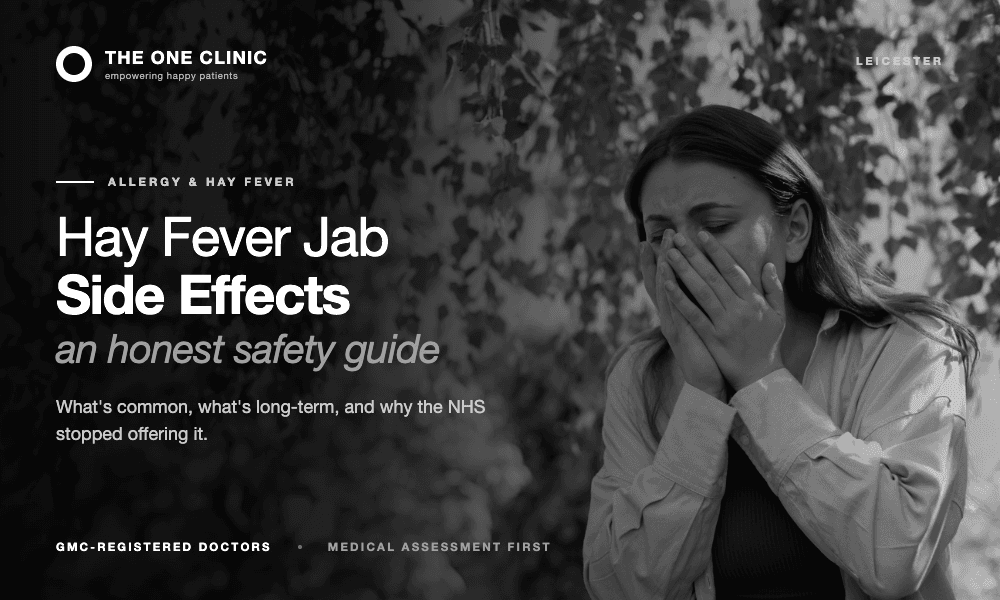
Most hay fever jab side effects are mild and short-lived, such as soreness or redness at the injection site. But the injection is a strong steroid that works across your whole body, so it can also cause more serious problems, and once it is given, it cannot be removed for several weeks. This is one of the main reasons the NHS no longer offers the hay fever jab, and why it is not licensed in the UK to treat hay fever.
If your symptoms feel impossible to control, it makes sense to first understand the full safety picture. This guide explains the common and long-term side effects in plain English, so you can weigh up the risks and look at safer ways to get relief. If you are also wondering where to get hay fever injections safely, our separate guide covers your options in detail.
Common Hay Fever Injection Side Effects
For most people, the side effects of the common hay fever injection are mild and pass within a few days. They can include:- Redness, pain or swelling where the injection was given
- Headache or feeling dizzy
- Trouble sleeping
- Changes in mood, such as feeling restless or irritable
- An upset stomach, indigestion or bloating
- Temporary weight gain or fluid retention
- A short-term rise in blood sugar
- A noticeable increase in appetite
- Facial flushing, or a warm, red feeling in the face
- Feeling more thirsty than usual
- Mild nausea or feeling sick
- Sweating more than usual, including at night
What Is the Hay Fever Jab?
The hay fever jab is a steroid (corticosteroid) injection given into a large muscle, usually in the buttock. It does not cure hay fever. Instead, it calms the part of your immune system that overreacts to pollen, which can ease symptoms for several weeks. Two things matter from the start:- The injection is a prescription-only steroid. It is licensed in the UK for certain conditions, such as joint and inflammation problems, but not for hay fever.
- The medicine spreads through your whole body, not just your nose and eyes. That is why it can affect other parts of your health.
Still Sneezing Through Every Summer, Even With Tablets and Sprays?
- A proper medical assessment can pinpoint what is really triggering your symptoms
- GMC-registered doctors identify which safe, proven treatments will work best for you
- Honest advice — including when the injection is not the right choice
Why Did the NHS Stop Offering the Hay Fever Jab?
The NHS stopped giving the hay fever jab because the risks were felt to outweigh the benefits. The main concerns were:- It delivers a high dose of steroid that affects the entire body.
- Once injected, it cannot be taken back out if side effects appear.
- There was not enough strong evidence that it was safe or worthwhile for long-term, repeated use.
Hay Fever Jab Side Effects Long Term
The more serious long-term side effects are less common, but they matter most when you weigh up the injection. Because it is a powerful steroid that travels around the body, the hay fever steroid injection side effects linked to repeated or higher doses can include:- A weaker immune system, which makes infections such as flu, shingles, and chickenpox more likely
- Raised blood pressure
- Higher blood sugar, which is a particular concern for anyone with diabetes
- Mood or mental health changes
- Thinning of the skin, or a dimple or scar at the injection site
- Thinning of the bones (osteoporosis) over time, raising the risk of fractures
- Effects on the eyes, such as raised pressure inside the eye
How the Hay Fever Injection Works in the Body
Knowing how it works explains where the risks come from. When pollen lands in your nose, eyes, or throat, your immune system overreacts and releases chemicals that cause sneezing, itching, and a blocked or runny nose. The steroid injection lowers this whole-body immune response. That can reduce symptoms, but the same effect also lowers your normal defences and influences other systems, from blood sugar to bone strength. Put simply, the injection cannot tell the difference between calming your hay fever and affecting your overall health. This is why careful medical screening matters so much, and why the treatment does not suit everyone.Is the Hay Fever Jab Safe?
For most healthy adults, a single dose is unlikely to cause lasting harm, but it carries real risks that cannot be ignored — which is exactly why it is no longer offered on the NHS for hay fever and is not licensed for this use in the UK. The injection is generally not suitable, or needs extra caution, for people who:- Are under 18, pregnant, or breastfeeding
- Have an active infection
- Have diabetes
- Have stomach ulcers
- Have glaucoma or another eye condition
- Have thinning bones or osteoporosis
- Have recently had, or are about to have, a live vaccine
Not Sure Which Hay Fever Treatment Is Safe for You?
- GMC-registered doctors review your full medical history before recommending anything
- Clear explanation of every option so you can make an informed decision
- Safe, consultation-led care at a CQC-registered clinic in Leicester

Look and Feel Your Best Every Day!
- •Advanced facial, body, and hair treatments.
- •Tailored solutions for lasting confidence.
- •Caring support at every step.
Safer Ways to Manage Hay Fever
For most people, safer and well-proven treatments control hay fever effectively, especially when used together and started early in the season. Options include:- Antihistamine tablets — widely available from pharmacies to reduce sneezing, itching, and a runny nose
- Steroid nasal sprays — help calm inflammation inside the nose when used correctly and consistently
- Eye drops — ease itchy, red, or watery eyes
- Allergen avoidance — simple steps such as checking the pollen forecast, keeping windows shut on high-pollen days, showering after being outdoors, and wearing wraparound sunglasses
- Allergen immunotherapy (desensitisation) — a longer-term, specialist-led treatment that slowly trains the immune system to react less to pollen, suitable for some people with severe, confirmed allergies
Conclusion
In short, most hay fever jab side effects are mild and temporary, but the injection is a strong, whole-body steroid that carries serious risks, and it cannot be reversed once given. That is why the NHS no longer offers it for hay fever, why it is not licensed for this use in the UK, and why proven, lower-risk treatments are now the recommended approach. You do not have to put up with symptoms that ruin your summer, but you also should not accept any treatment without understanding the full safety picture first. The best next step is honest, expert advice tailored to your health. The GMC-registered doctors at The One Clinic in Leicester can assess your symptoms and talk you through safe, suitable ways to manage your allergies.Take the Next Step in Your Aesthetic or Health Journey!
- •Personalised treatments for your unique needs.
- •Safe, effective, and natural-looking results.
- •Expert guidance from our professionals.

.png&w=3840&q=75)