
There are several types of skin lesions that are common in individuals of all ages and genders. There are two broad classifications: primary and secondary skin lesions. Moles, blisters, warts, wheals, acne, hives, and impetigo are some of the growths people experience on their skin.
There are as many as two dozen skin lesions known to us. They are simply abnormal spots, bumps, or patches that look different from the surrounding skin. A single type of skin lesion can be a flat freckle, a fluid blister, or a rough patch. This guide explains all skin lesions types so you can understand your skin better and choose the right treatment for it.
What Are the Main Types of Skin Lesions?
Skin experts classify spots based on how and when they form. Doctors often use a types of skin lesions chart to identify a bump quickly during a clinical exam. The two major categories are primary and secondary.Primary Skin Lesions
Primary skin lesions are present at birth or form as the first sign of an illness. They are the direct result of a skin condition or a genetic trait. Here are the main skin lesions types you might notice:- Macule: A flat, discoloured spot that sits level with the skin and is less than 1 centimetre wide. A freckle or a flat birthmark is a perfect example. They do not cause pain.
- Papule: A small, solid, raised bump. Common acne or a small wart is a papule. They feel firm when you touch them.
- Plaque: A flat, raised patch that feels rough and is larger than 1 centimetre. These often appear with psoriasis. They usually look silvery or red.
- Nodule: A firm bump that rests deep under the skin tissue, such as a cyst. It feels like a hard knot inside the skin.
- Vesicle and Bulla: Raised blisters filled with clear fluid. Vesicles are tiny, while bullae are much larger. A mild burn often forms these.
- Pustule: A small bump filled with pus. You often see these with severe acne. They usually have a white or yellow centre.
- Wheal: A sudden, red, swollen mark. Hives are a common form of wheals. They happen because of an allergic response.
- Burrow: A tiny tunnel in the skin created by a parasite, like a scabies mite.
Secondary Skin Lesions
Secondary skin lesions develop when a primary spot changes, forming when you scratch, rub, or irritate a bump. This may turn it into an unhealed wound. The original mark transforms into severe concerns, including:- Crust: A hard scab formed from dried blood or fluid over a broken blister. It protects the wound as it heals.
- Scale: Flaky, dry patches of dead skin cells that peel off easily. You often see this with severe dandruff or eczema.
- Ulcer: A deep, open sore that damages the lower tissue. It often fails to heal fast and carries a high risk of infection.
- Fissure: A deep crack in the skin surface caused by extreme dryness or harsh weather.
- Scar: Thick tissue that replaces normal skin after a deep cut or severe trauma. It often looks pale or slightly raised.
- Excoriation: Raw marks caused by a harsh scratch or a pick at the skin.
Understand Your Skin Lesion Types and Achieve Clear Skin
- Thorough assessment by experts
- Best clinical treatments
- Safe and effective methods
Signs to Identify Common Skin Lesions
To understand exactly what mark you have, you must look at the specific signs. Every type of skin lesion leaves distinct visual clues. This helps identify the root issue faster. Here is how you can recognise each type of skin lesion:Signs of Viral and Bacterial Infections
Infections cause sudden and often painful changes to the skin.- Cold Sores: These appear as painful, fluid-filled vesicles around the mouth. The herpes virus causes them. They often tingle before they form.
- Chickenpox: This viral issue creates itchy blisters all over the body. These blisters eventually turn into dry crusts.
- Impetigo: This bacterial infection leaves distinct honey-coloured crusts on the skin. It is highly contagious and mostly affects children.
- Cellulitis: This is a severe bacterial infection. It leaves the skin hot, red, and swollen. It feels very tender to the touch.
Signs of Allergic Reactions
When your skin touches an irritant, it reacts quickly.- Contact Dermatitis: This shows up as red, itchy plaques or macules after you touch a harsh chemical or a plant. The skin barrier becomes very irritated.
- Hives: These appear as raised, red wheals. They form suddenly due to food allergies, stress, or harsh weather. They often itch intensely.
Signs of Sun Damage and Natural Growths
Some lesions develop slowly over time due to sun exposure or genetics.- Moles: These are normal, pigmented papules or macules. Most are entirely harmless and have smooth borders.
- Skin Tags: Soft, fleshy bumps that hang off the skin. They are a benign type of skin lesion that often forms on the neck.
- Actinic Keratosis: Rough, scaly patches caused by severe sun damage. These feel hard and are precancerous, so they require a prompt medical check.
Reduce the Risk of Long-Term Complications of Skin Lesions. Seek Right Care
- A wide range of professional treatments
- Personalised care
- Minimal downtime
How Do Experts Diagnose Skin Lesions?
To find the exact cause of a spot, expert practitioners perform a safe check. Guessing the cause is never a good idea. Doctors use a strict process to confirm the problem.- Visual Exam: The doctor uses a bright light to look closely at the skin lesions types and shapes. They check the exact size, the border, and the colour of the mark.
- Dermoscopy: They use a small handheld microscope to look deeper into the skin pigment.
- Swab Test: They take a small fluid sample from a blister to check for bacteria or a virus.
- Wood Light Exam: This test uses an ultraviolet light to examine the skin colour. It helps to spot fungal issues quickly.
- Skin Biopsy: For a serious mark, they remove a tiny piece of tissue. A laboratory tests this sample under a microscope. This is the best way to rule out severe diseases or skin cancer.
Best Treatment Options For Skin Lesions
Once the diagnosis is clear, the doctor suggests the best treatment. Many common spots are harmless and fade naturally. However, when care is necessary, you might need effective methods to restore your skin safely with permanent removal.Cryotherapy
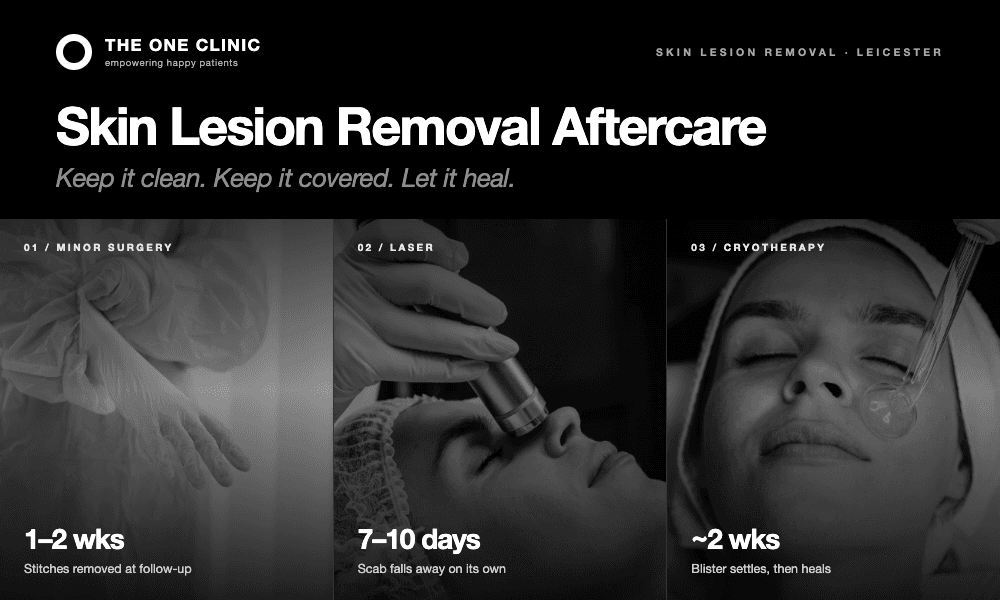
This involves liquid nitrogen to freeze off the abnormal tissue safely. It works wonderfully for warts or actinic keratosis. The frozen tissue simply falls away after a few days.Laser Therapy
A highly focused beam of light targets the cells. The laser breaks down the abnormal skin while leaving the healthy tissue completely safe. It is a brilliant option for a clean, cosmetic result.Excision
For deep cysts or suspicious moles, the doctor performs a minor surgical excision. They cut the spot out entirely and close the small wound with stitches. This ensures the mark does not grow back. To understand more about this approach, read our guide on the common types of cysts we treat.Curettage
The doctor gently scrapes the surface of the skin with a sharp medical tool. This removes raised, superficial bumps cleanly and fast.
Look and Feel Your Best Every Day!
- •Advanced facial, body, and hair treatments.
- •Tailored solutions for lasting confidence.
- •Caring support at every step.
When Should You See A Doctor?
Most spots are harmless and fade away naturally. However, you must seek professional care if a mark shows warning signs. You should always consult a doctor if a spot:- Changes in size, shape, or colour rapidly
- Develops an irregular, jagged border
- Bleeds, oozes fluid, or feels extremely painful
- Fails to heal after a few weeks
Final Word on Skin Lesion Types
The types of skin lesions are simply abnormal marks, such as a flat macule, a raised papule, or a fluid-filled blister. You have to identify both primary and secondary spots on your body to understand the severity and the best ways to treat them. If you notice strange signs, clinical treatments offer excellent solutions. The expert practitioners at The One Clinic provide the best Dermatology Care in Leicester, safely assessing and treating every mark on your skin.Take the Next Step in Your Aesthetic or Health Journey!
- •Personalised treatments for your unique needs.
- •Safe, effective, and natural-looking results.
- •Expert guidance from our professionals.

FAQs
1. Are skin lesions normal?
Yes. Almost everyone has at least one skin lesion. A common freckle, a birthmark, or a typical mole is entirely normal. The vast majority of these marks are benign and cause absolutely no harm to your health.2. What are the 10 common types of primary skin lesion?
Primary lesions can number more than a dozen. The 10 primary skin lesions that most adults and teens experience include:- Pimples
- Papules
- Pustules
- Normal moles
- Macule
- Tumour
- Bulla
- Burrow
- Nodule
- Plaque
.png&w=3840&q=75)